Why Visit:
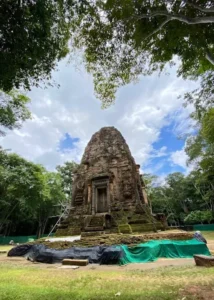
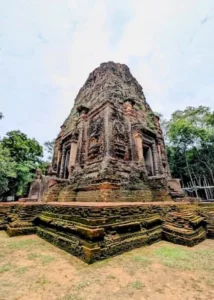
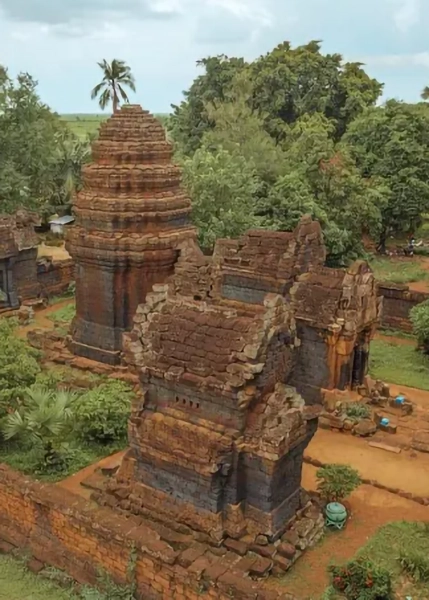
Wat Kuhak Nokor, also known as Prasat Kuhak Nokor, is a Buddhist temple complex in Kampong Thom Province, Cambodia, dating back to the 10th-11th century during the reign of King Suryavarman I (1002–1050). It was originally a Hindu temple that was later transformed into a Buddhist pagoda. The temple is notable for its square-shaped courtyard made of laterite and sandstone, decorated with lotus motifs and ancient statues, including the local revered “Neak Ta Bark Kor” figure. Two large ponds lie to the east of the temple, adding to its atmospheric setting. The temple showcases early Khmer architecture and holds both historical and spiritual significance, making it a fascinating spot for visitors interested in Cambodia’s cultural heritage.
Location:
Trodork Poung Village, Pong Ror Commune, Baray District, Kampong Thom Province, Cambodia. It is about 79 km from Kampong Thom town, accessible by National Road 6 with a short turn to the temple.
Open Hours:
Typically open daily from 7:00 AM to 5:00 PM.
Activities:
– Explore the temple complex’s laterite and sandstone structures with intricate carvings.
– View ancient statues and floral decorations on the throne and temple walls.
– Walk around the two serene ponds adjacent to the temple.
– Learn about the transition from Hinduism to Buddhism visible in the temple’s history.
– Engage with local guides or monks to understand its spiritual importance.
Ticket Price:
Entrance fee is generally included in local tours; prices may vary.
Visitor Tips:
– Visit in the dry season (November to April) for best conditions.
– Wear comfortable shoes for walking on stone and uneven ground.
– Bring water and sun protection.
– Respect the Buddhist practices and surroundings in the active pagoda area.
Best Time to Visit:
Morning or late afternoon for cooler weather and good photo lighting.
Weekdays to avoid larger crowds and enjoy a peaceful visit.
Wat Kuhak Nokor offers a remarkable glimpse into Cambodia’s religious evolution and ancient Khmer architecture within a serene rural setting, making it a meaningful cultural and spiritual stop in Kampong Thom.