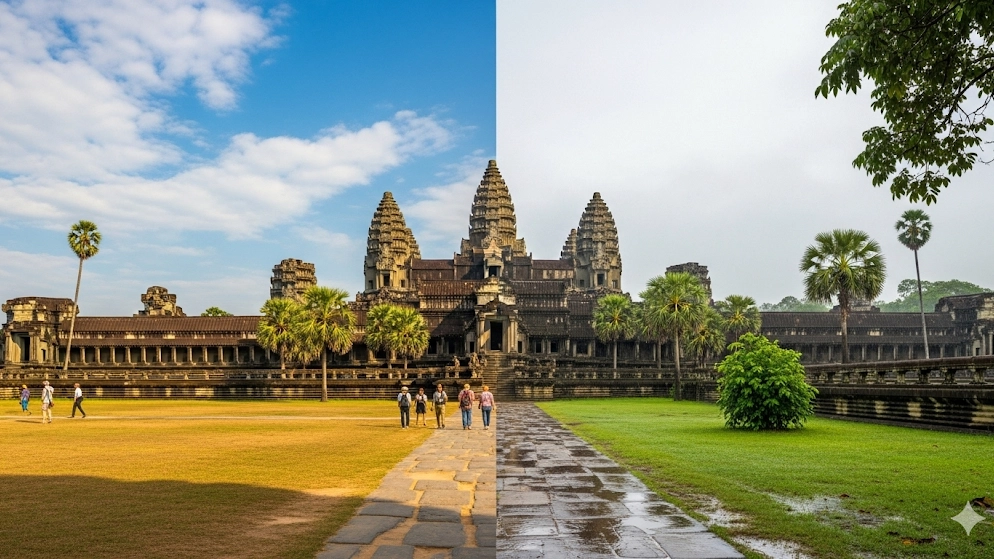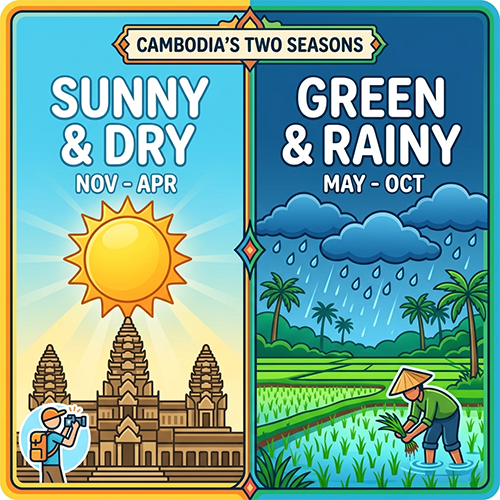
In Cambodia, the weather doesn’t follow the four seasons like in some other parts of the world. Instead of spring, summer, fall, and winter, life here is shaped by two main seasons. Understanding these seasons is very important because they tell farmers when to plant and tell travelers when to visit.
The Sunny and Dry Season
From November to April, the sun stays out and the sky is usually a bright blue. This is the time of year when the land starts to dry out. The first few months, from November to January, are very pleasant because the air is a bit cooler and the humidity is low. This is the most popular time for people to visit the temples or go to the beach because you don’t have to worry about rain. As the months go by and March and April arrive, the heat gets much stronger. This is when the famous Khmer New Year happens, and people often splash water on each other to stay cool during the hottest days of the year.
The Green and Rainy Season
From May to October, the “Monsoon” winds bring rain from the ocean. While some people might think a rainy season sounds gloomy, in Cambodia, it is actually a very beautiful time. After the first few rains, the dusty brown ground quickly turns into a bright, lush green. The rain usually doesn’t last all day instead, it often comes in a big, heavy burst for an hour or two in the afternoon. This water is exactly what the rice paddies need to grow. For farmers, this is the busiest and most important time of the year. The air feels fresh, the lakes fill up with water, and the whole countryside looks like a tropical paradise.
The Rhythm of Life
These two seasons create a natural rhythm for everyone living in Cambodia. The dry season is for traveling, celebrating, and finishing construction projects. The rainy season is for growing food and watching the nature come back to life. Both seasons have their own special beauty. Whether the sun is shining bright or the rain is cooling down the earth, the weather is what makes the Cambodian landscape so rich and full of life.