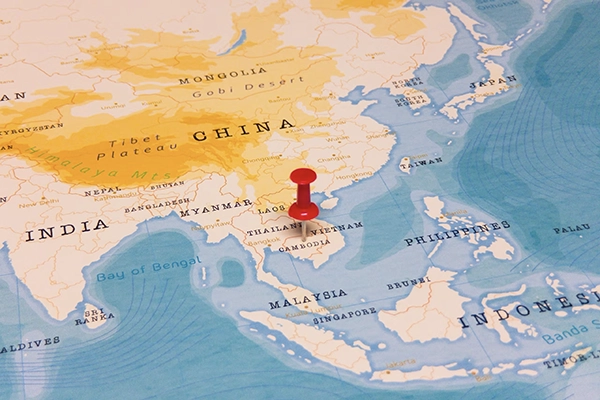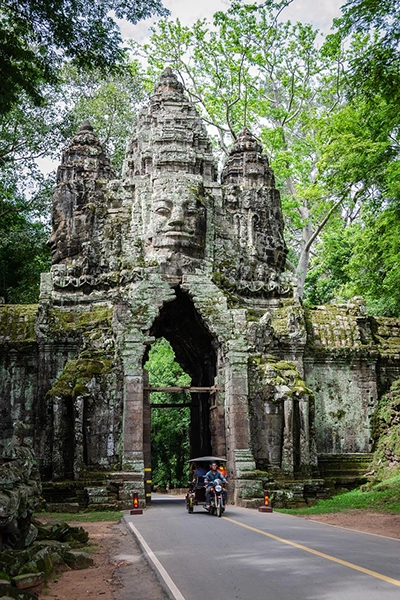
Angkor Thom (Khmer: អង្គរធំ, meaning “Great City”), also known as Nokor Thom (Khmer: នគរធំ), was the last and most enduring capital of the Khmer Empire. Founded in the late 12th century by the legendary King Jayavarman VII, Angkor Thom covers 9 km² and is surrounded by towering walls and a wide moat. At its heart stands the Bayon Temple, famous for its giant stone faces, while other monuments such as Baphuon, Phimeanakas, and the Elephant Terrace showcase the city’s grandeur.
Today, Angkor Thom is one of the most visited attractions in Siem Reap and a highlight of the Angkor Archaeological Park. For tourists, it offers a fascinating blend of history, architecture, and mythology.
Etymology
The name Angkor Thom comes from the transformation of its older name Nokor Thom. “Nokor” derives from the Sanskrit word Nagara (नगर), meaning “city,” while “Thom” means “big” or “great” in Khmer. Over time, Nokor Thom evolved into Angkor Thom, the name by which it is known today.
Historical Background
Angkor Thom was built shortly after Jayavarman VII’s coronation in 1182 AD, following his victory over the invading Chams. The city became the center of a vast building program and symbolized the Khmer Empire’s power at its peak.
- Earlier settlements, including Yasodharapura, overlapped with parts of Angkor Thom.
- Important pre-Jayavarman temples within the city include Baphuon and Phimeanakas, which was later incorporated into the Royal Palace.
- The city remained active until the Ayutthaya Kingdom sacked it in the 15th century, after which the capital was moved to Phnom Penh.
- By the early 1600s, Angkor Thom was abandoned, though poetry like the Poem of Angkor Wat (1622) still praised its beauty.
At its height, Angkor Thom is believed to have supported a population of 80,000–150,000 people.
The Architecture and Style
Angkor Thom is built in the Bayon style, known for its large scale, use of laterite stone, and face towers.
- City Layout: A square city, each side of the wall measures 3 km long, enclosing 9 km². The walls are 8 m (26 ft) high and backed by an earth embankment, with a parapet on top.
- Moat: A wide moat surrounds the city, symbolizing the cosmic ocean around Mount Meru, a sacred mountain in Hindu and Buddhist cosmology.
- Gates: There are five monumental gates — north, south, east, west, and the Victory Gate. Each is topped with four massive stone faces, believed to represent either the king, Avalokiteshvara (the bodhisattva of compassion), or guardians of the empire.
The Causeways
Each causeway across the moat is flanked by 54 gods (devas) on one side and 54 demons (asuras) on the other, pulling a giant naga (serpent). This depicts the Hindu myth of the Churning of the Ocean of Milk, symbolizing the eternal struggle between good and evil.
Highlights Inside Angkor Thom
- Bayon Temple: Located at the center, Bayon is Jayavarman VII’s state temple, famous for its smiling stone faces and intricate bas-reliefs.
- Baphuon: An earlier state temple, restored in recent decades, located near the Royal Palace.
- Phimeanakas: Incorporated into the Royal Palace, this pyramid temple was once a private royal sanctuary.
- Elephant Terrace: A long platform decorated with carvings of elephants, used for royal ceremonies and parades.
- Victory Square: Located north of Bayon, where major processions and military events took place.
- Prasat Chrung: Four corner shrines dedicated to Avalokiteshvara, located at each corner of the city walls.
Daily Life in Angkor Thom
Chinese emissary Zhou Daguan, who visited at the end of the 13th century, described life in Angkor Thom:
- Elite homes were large and decorated with carvings and paintings of the Buddha.
- Royal buildings used lead or clay roof tiles, while ordinary people lived in wooden houses roofed with thatch.
- Since wood was the main material, none of these houses remain today.
Within the walls, a network of canals carried water across the city. The urban core was densely occupied, though now mostly forested.
The South Gate Experience
The South Gate is the most famous and best preserved, located 7.2 km north of Siem Reap. Tourists crossing the causeway here are greeted by towering faces and rows of devas and asuras locked in their cosmic tug-of-war.
Travel Tip: Climb onto the wall for sweeping views of the moat and causeway. For an adventurous option, rent a bicycle and ride along the ancient walls.
Why Visit Angkor Thom?
- Historic Importance: The last great capital of the Khmer Empire.
- Iconic Monuments: Bayon, Baphuon, Elephant Terrace, and Phimeanakas.
- Mythology in Stone: Carvings of Hindu legends, including the Churning of the Ocean of Milk.
- Tourist Friendly: Easy access from Angkor Wat, only 30 minutes from Siem Reap.
Travel Tips for Tourists
- Best Time to Visit: Early morning or late afternoon for fewer crowds and beautiful light.
- How to Get Around: Hire a tuk-tuk, rent a bicycle, or book a guided tour for deeper insight.
- What to Bring: Sunscreen, water, hat, and comfortable walking shoes.
- Cultural Respect: Dress modestly and avoid climbing on fragile structures.
Conclusion
A visit to Angkor Thom is more than just sightseeing — it is a journey into the heart of Khmer civilization. From the serene faces of Bayon Temple to the mythological carvings on the city gates, every corner tells a story of power, faith, and artistry. Whether you explore by foot, bicycle, or tuk-tuk, Angkor Thom is an unforgettable highlight of any trip to Cambodia.