
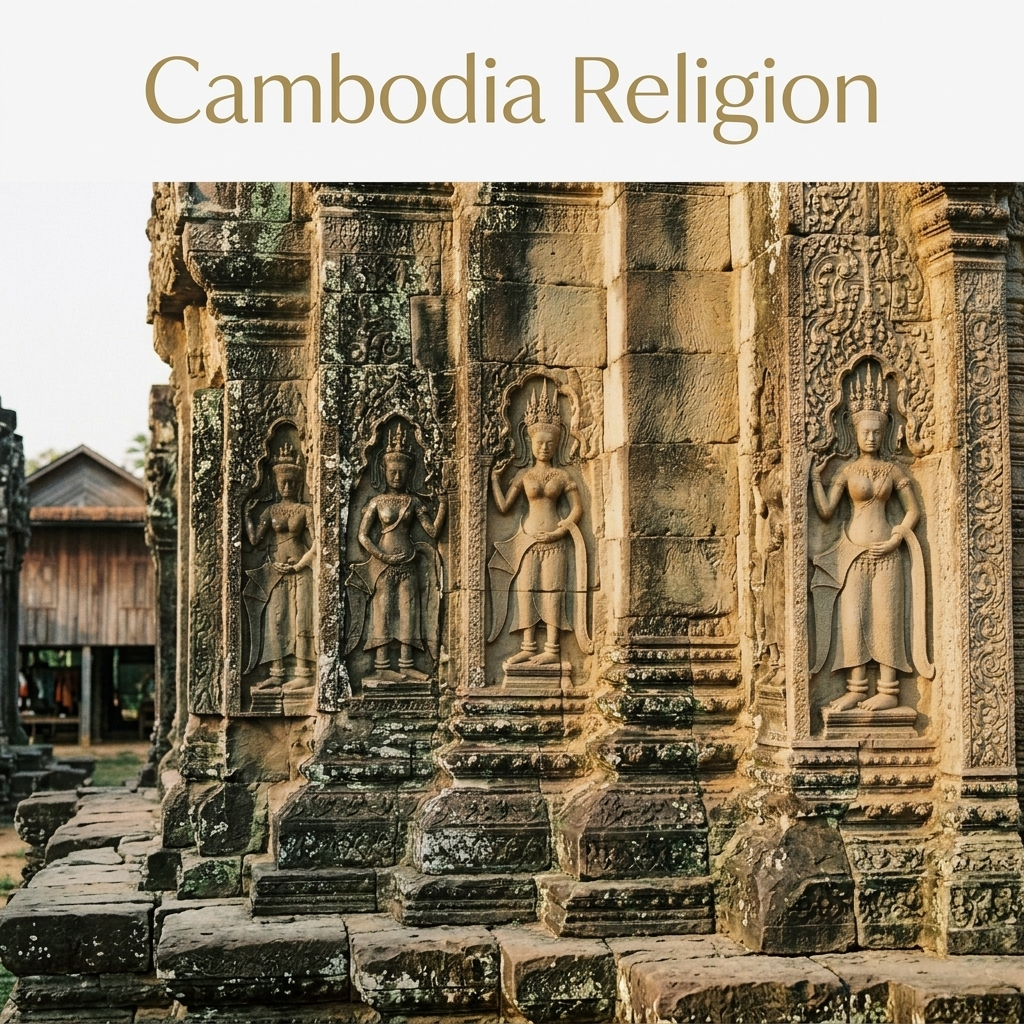
Religion is a core part of Cambodia’s identity, shaping the daily choices, traditions, and social interactions of its people. It is not just something practiced on special occasions, but a framework that guides how the community functions every day.
Theravada Buddhism: The State Religion
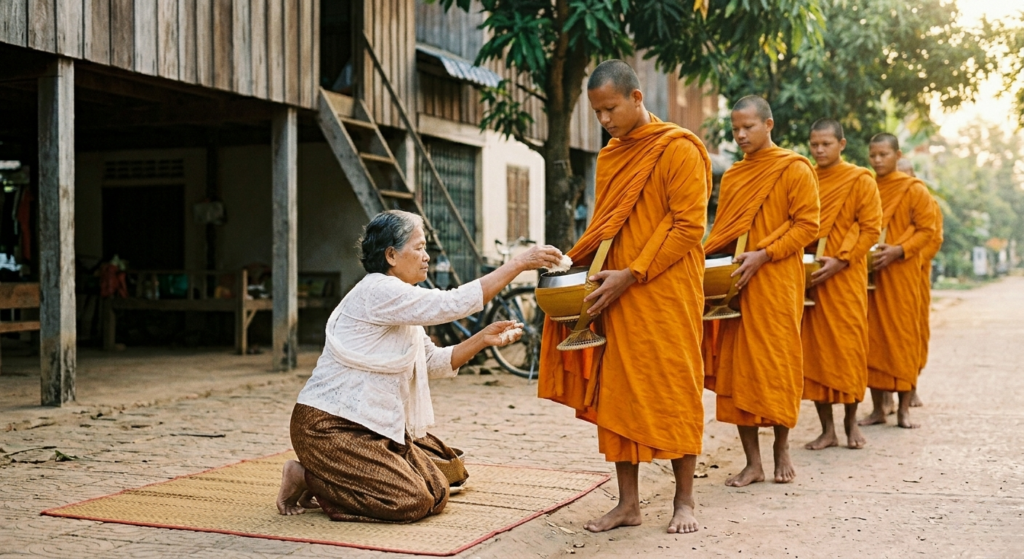
Theravada Buddhism is the official religion of Cambodia, practiced by over 95% of the population. The local temple, or wat, serves as the social and spiritual hub for every village and neighborhood.
- The Pursuit of Merit: Daily practices revolve around the concept of bon (merit). Cambodians build good karma by offering food to monks during morning alms, making donations to temples, and supporting others.
- The Monastic Tradition: Becoming a monk is a common rite of passage for young men. Many choose to ordain temporarily for a few weeks or months to bring spiritual merit to their parents and learn ethical teachings.
- Major Holidays: Religious festivals dictate the calendar. Events like Pchum Ben (Ancestor’s Day) and Visak Bochea (celebrating the Buddha’s life) bring families together across the country to pray and share meals.
Ancient Roots: Hindu and Animist Influences
While the country is primarily Buddhist today, older traditions still live comfortably alongside modern practices. Historically, ancient empires practiced Hinduism, which heavily influenced Cambodia’s art, architecture, and royal ceremonies.
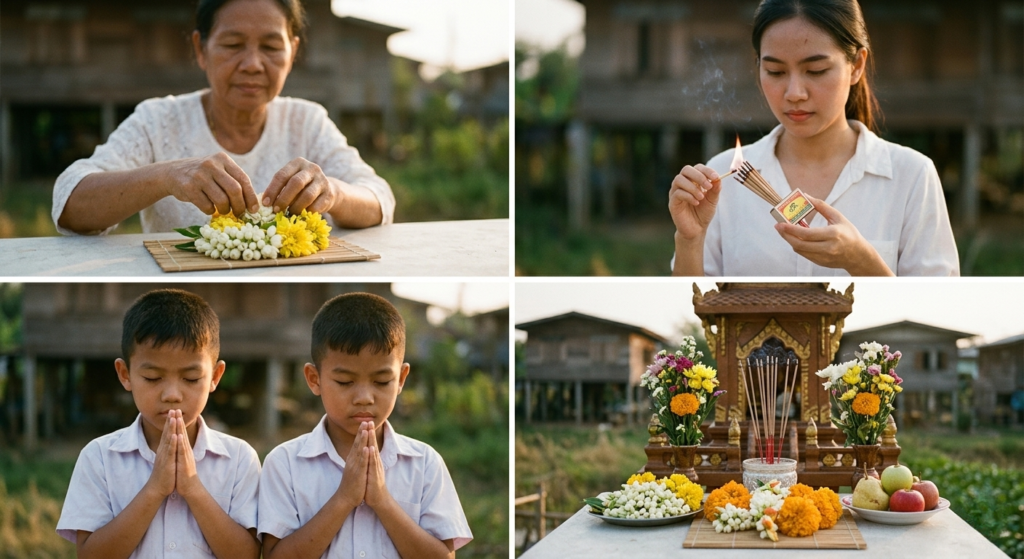
Additionally, animism, the belief in local spirits, is a visible part of daily life. Almost every home, business, and temple courtyard features a tiny “spirit house”. People place small offerings of water, fruit, or flowers at these shrines to keep guardian spirits happy and ensure peace for their household.
Religious Harmony and Diversity
Cambodia is home to other vibrant religious communities that live peacefully together.
- The Cham Muslims: Making up a few percent of the population, the ethnic Cham people preserve a rich Islamic tradition. Their villages and mosques are primarily situated along the major rivers and coastal provinces.
- Christianity and Indigenous Beliefs: Small Christian communities exist in city centers, while indigenous tribal groups in the remote northeastern provinces maintain ancient ethnic religions connected to nature.
Religious tolerance is supported by the constitution, allowing different faiths to practice safely. This shared respect creates the gentle, calm environment that defines the Cambodian lifestyle.


