Why Visit:
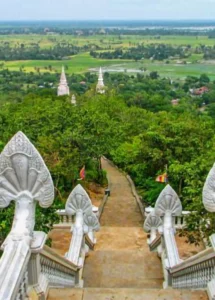
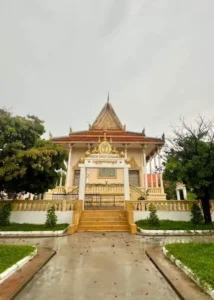
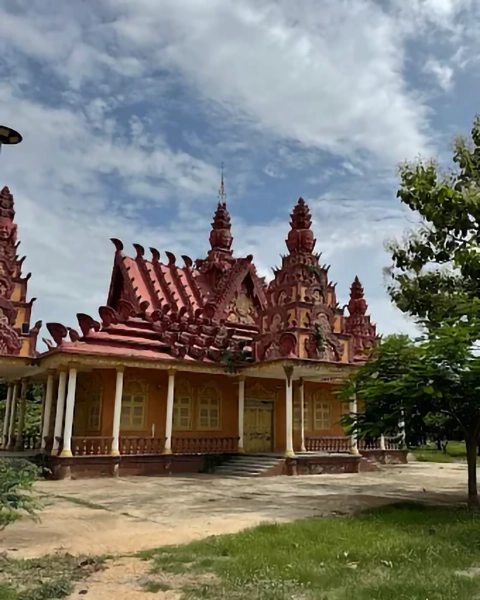
Angkor Chey Pagoda is a sacred and historically significant Buddhist temple in Kandal Province, offering visitors a serene spiritual retreat close to Phnom Penh. It is renowned for its beautiful five-peaked architecture, peaceful gardens, and rich cultural heritage dating back to the 18th century. Visitors can experience traditional Buddhist rituals, climb the seven-storey pagoda for panoramic countryside views, and participate in meditation sessions. The site also features an ancient black hill believed to be a former palace with sacred relics, adding to its mystical allure.
Activities:
- Explore the temple complex and its beautifully landscaped gardens.
- Cross the 100-meter wooden bridge over a large pond to reach the pagoda.
- Climb the seven-storey pagoda, viewing different Buddha statues on each floor and enjoying expansive views of the countryside.
- Participate in meditation sessions guided by resident monks.
- Witness traditional Buddhist ceremonies and festivals, such as Pchum Ben and Khmer New Year.
- Visit the nearby black hill site, regarded as sacred and historically significant.
- Enjoy the tranquil environment with cool shade from trees and peaceful surroundings.
Ticket Price:
Entry is generally free; donations are welcomed to support temple maintenance and activities.
Visitor Tips:
- Dress modestly and respectfully as it is an active religious site.
- Remove shoes before entering temple buildings.
- Maintain silence and decorum during meditation and ceremonies.
- Bring water and sun protection for outdoor exploration.
- Respect local customs and avoid littering.
Best Time to Visit:
- Dry season from November to March for pleasant weather.
- Early morning or late afternoon for cooler temperatures and better lighting.
- During major Buddhist festivals for cultural immersion.
Angkor Chey Pagoda offers a peaceful cultural and spiritual experience, combining historical architecture, natural beauty, and living Buddhist traditions just a short drive from Phnom Penh. It is ideal for visitors seeking tranquility, cultural insight, and a connection to Cambodia’s religious heritage.